


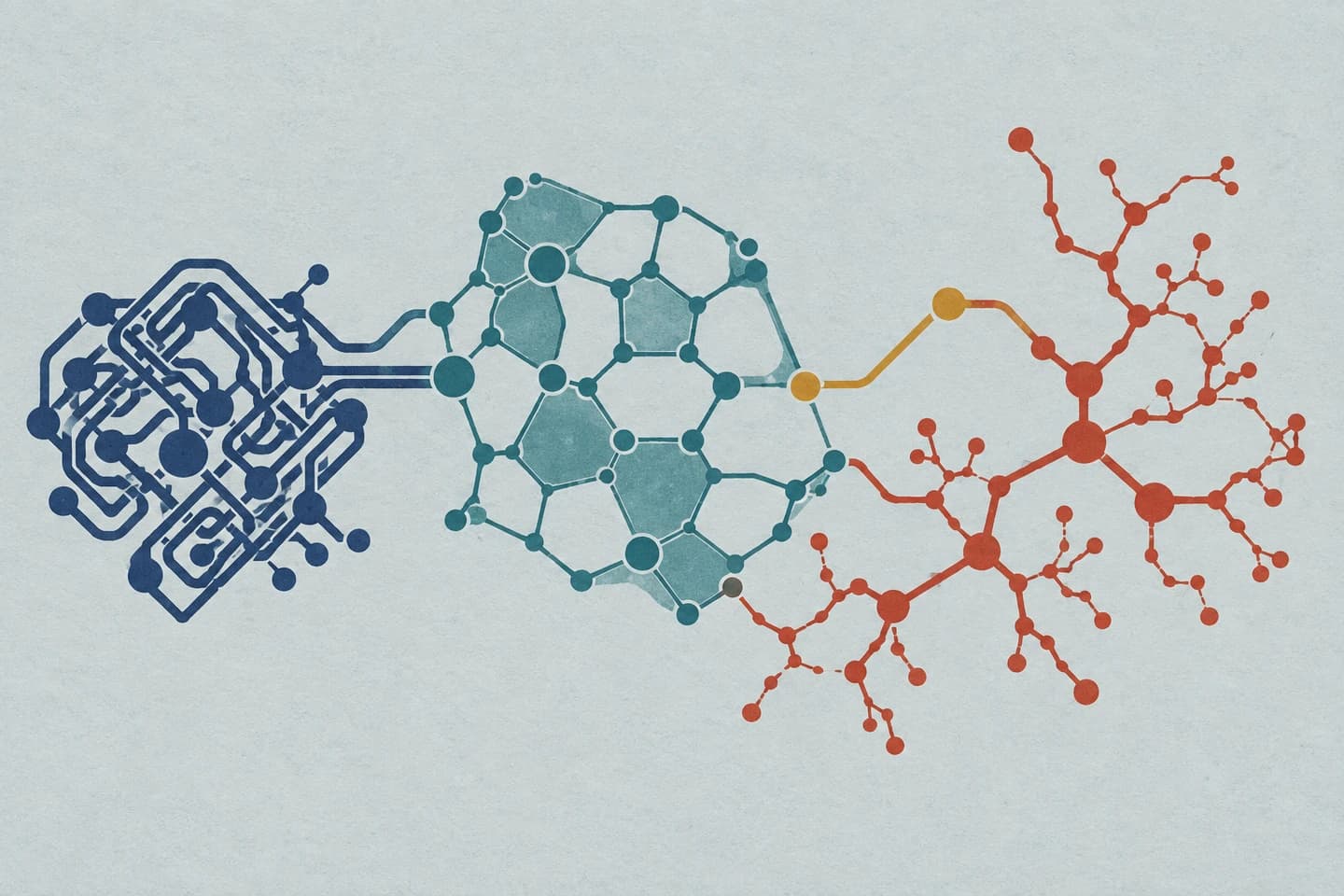

Live·Open questions in longevity research

Eternal Search

We exist so you can exist

See the whole picture of the fight against death, put forward the best hypotheses, and be able to test them in an experiment as fast as possible.

The main analysis

Questions that must be answered before we can defeat ageing

A well-posed question is half the answer

  1. AnsweredHow should our strategy change depending on how complex we believe ageing to be?Open the deck
  2. NextIn which arena does the fight against death primarily take place?
  3. In workHow do we choose which hypotheses to test first? And how is that decided?
  4. In workWhere exactly are the bottlenecks? In science, money, culture, politics, or language? And how can we overcome them?
  5. In workHow can we create a pattern of culture that is invested in extending the life of a specific person?

Research directions

Scientific ideas for overcoming ageing

  1. Paradoxes of ageing

    If you see paradoxes in a theory, you are probably on the right track. They reveal where a familiar explanation stops working and a new question begins.

  2. Engineering vital functions

    We treat vital functions as engineering tasks: define the required outcome and compare ways to deliver it through drugs, cells, organoids and artificial systems.

  3. Big data on ageing

    Extract answers from open data. Cell atlases let us select a tissue, cell type and gene, compare groups and identify a pattern to test.

  4. Evolutionary biology of ageing

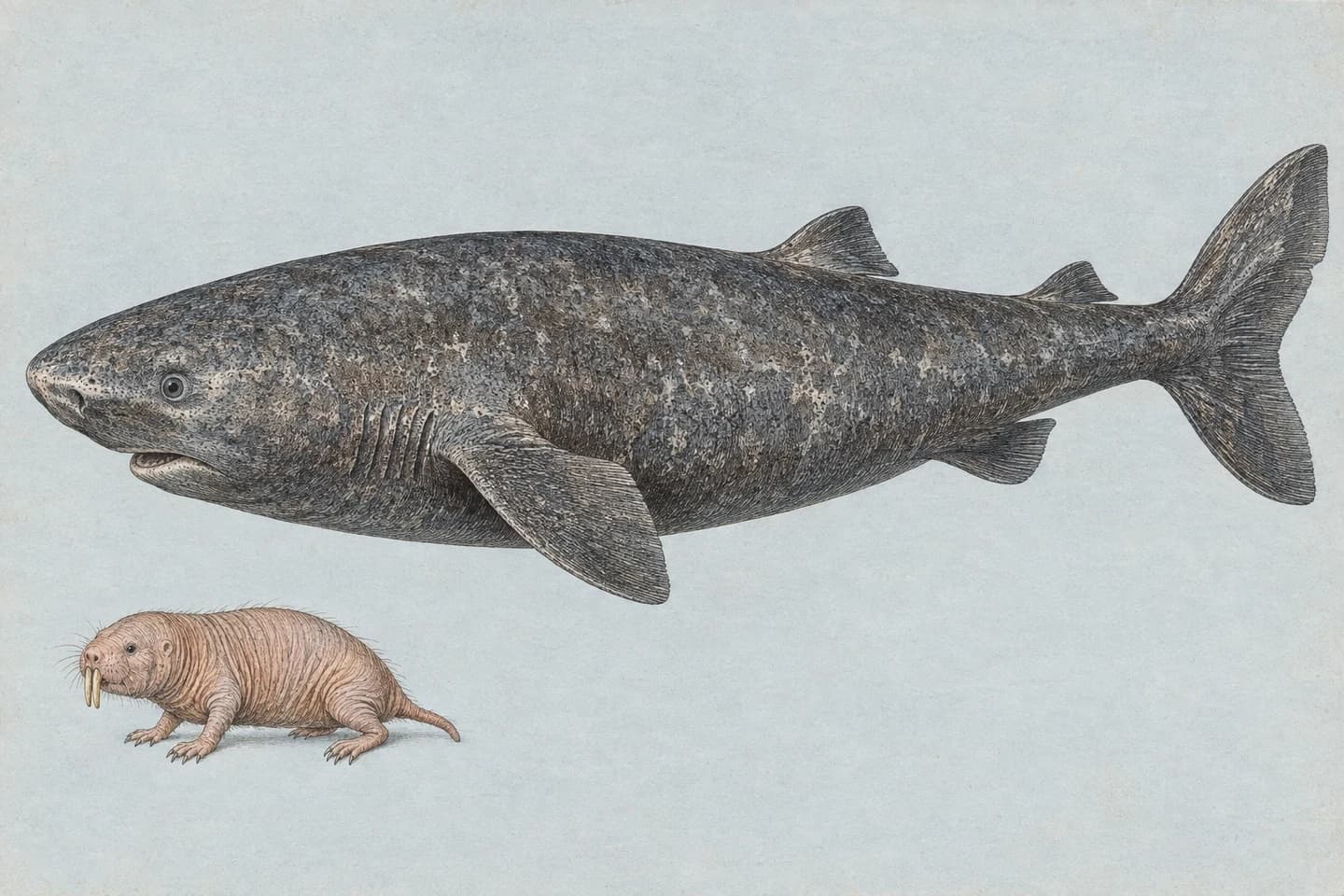
    Ask why some species live so much longer than others. Compare long-lived species, their environments and the evolution of ageing mechanisms.

  5. The silver bullet

    This perspective bets on one lever. One gene doubles a worm's lifespan, while in humans the same broken pathway removes cancer and diabetes and adds not a single year. We track where the silver bullet hits and what it costs.

  6. Facts, patterns and records

    Collect consequential facts about ageing, look for patterns and test which hypotheses fit them.

  7. Topology of age-related changes

    Study the spatial organisation of life: chromatin folding, cell arrangement and tissue architecture. Test how changes in shape and connections affect function.

  8. Combinatorial therapy

    Test how interventions work together, including their timing, shared targets and adverse interactions.

Fresh from Eternal Search

Know every development in the field, so you can make the best decisions about extending life

  1. News

    The U.S. Transhumanist Party proposes sustaining a political agenda for radical life extension through company failures and unsuccessful trials

    The U.S.

  2. News

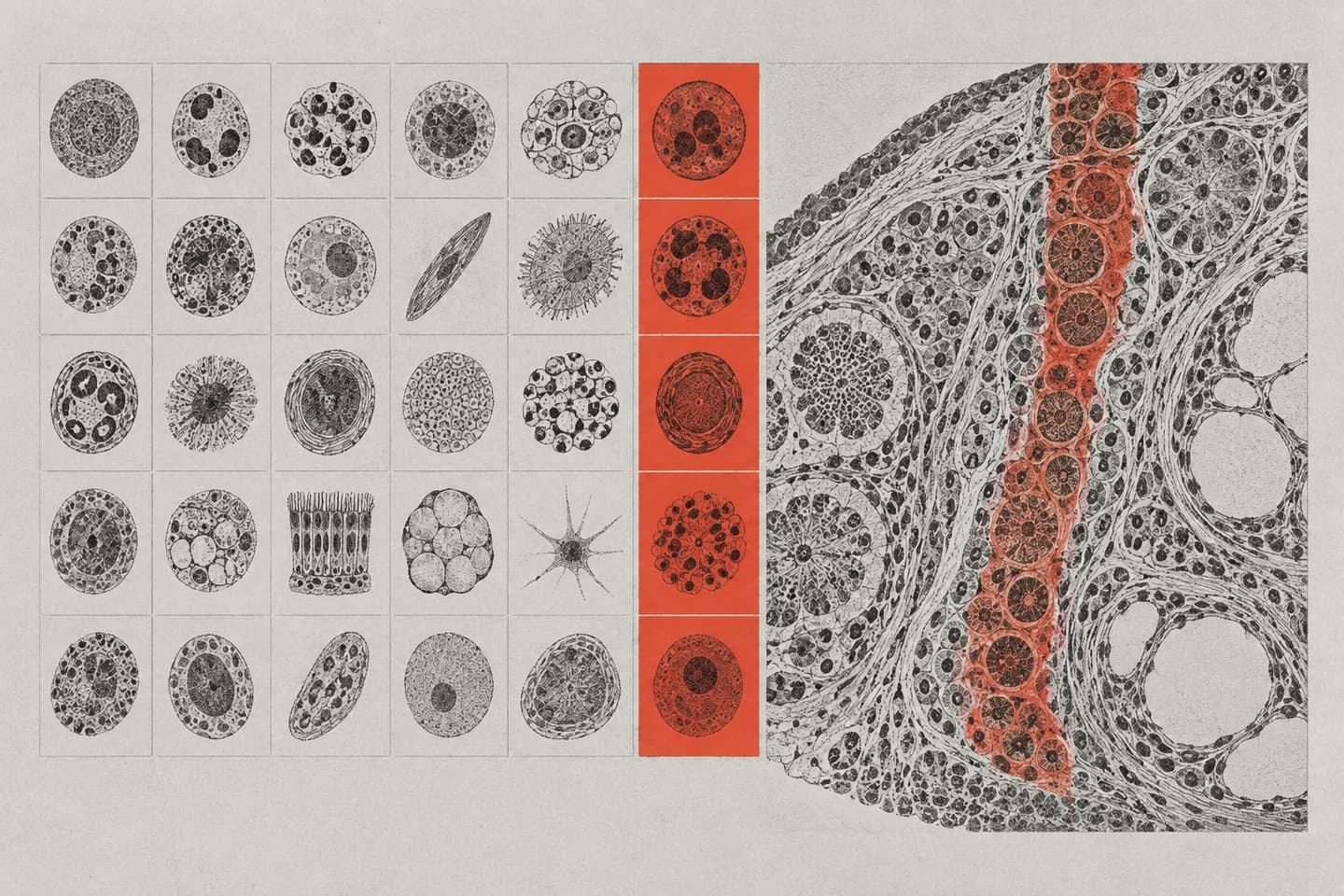
    A model predicts up to 47 years of delayed menopause after ovarian tissue transplantation; Maria Marinova asks whether the organ could function in an aging body

    Ovarian tissue transplants may delay menopause for decades, but success also depends on whether an aging brain and body can support the restored organ.

  3. News

    Preprint: Short telomeres remained linked to lung scarring after eight DNA variants were excluded

    A genetic analysis found that shorter telomeres remained strongly associated with idiopathic pulmonary fibrosis after excluding eight relevant DNA variants.

  4. New hypothesis

    Resident daughter cells may restrain epithelial invaders by replacing their renewing positions

    Does suppressing expanding cell families in aging human linings promote invasion or improve repeated repair?

  5. New hypothesis

    Skin lipid receptors may trigger internal signals that reduce damage in distant tissues

    Which repair action slows damage across human tissues beyond reducing energy demand, and which comparison explains its effect?

  6. New forecast

    When will Longevity Escape Velocity be reached?

Forecasts for the longevity field

All forecasts
  1. When will Longevity Escape Velocity be reached?Trading closes Nov 1, 2026
  2. In which year will it become possible to keep a mammalian head alive outside the body for at least 1 hour?Trading closes Nov 1, 2026
  3. In which year will a startup working on morphogenetic approaches to defeating aging reach a $300M+ valuation?Trading closes Nov 1, 2026
  4. Will 'Replacing' (organ and cell replacement therapies) generate $1 billion by 30 July 2027?Trading closes Nov 1, 2026
  5. In which year will a person with 1M+ Instagram followers upload their mind to a machine?Trading closes Nov 1, 2026

What we investigate ourselves

438 hypotheses about ageing

For every hypothesis: how it was arrived at, what answering it gives, which hypotheses compete and which experiments bring us closer to the truth

  1. Why might treatment for inflammation fail to slow human aging?

    The proposed benefit starts with blocking interleukin-11 signaling, followed by less inflammation, less accumulating damage, and better preservation of function. The proposed counterweight is that treatment might also disrupt repair or protection against infection, allowing additional injury to offset those gains.

    5 rival hypotheses

    Compare the hypotheses

    These are the question’s competing causal chains; the supplied sources do not establish their balance in humans. Equating reduced signaling with slower aging could therefore mistake a biological response for an overall health benefit, while assuming repair must worsen would overlook the repair benefits reported in some mouse models.

    Hypothesis 1

    Blocking interleukin-11 may shift genome repair toward error-prone end joining

    In prospectively specified cycling epithelial progenitors from aging humans, blocking interleukin-11 may increase structural repair errors despite reduced inflammatory injury and preserved early function. Bounded equivalence in repair accuracy for comparable initial lesions would constrain this claim

    What this hypothesis predicts

    Before observing repair outcomes, specify the donor population and baseline cellular eligibility, including epithelial lineage, cycling capacity and a reproducible endogenous IL-11 response measured in independent baseline aliquots. Do not define susceptibility by subsequently observing excess errors. Under randomized donor-paired control, ligand-neutralization and inducible IL11RA-loss conditions, compare characterized nonlethal lesion classes at matched genomic sites. Characterize initial break-end structure and chemistry, clustered or associated damage, complexity, local chromatin and replication context, lesion induction timing and burden. Equal break counts alone are insufficient. Combine a defined-break reporter with direct measurements at endogenous loci, including matched-site induced lesions and separately characterized ordinary endogenous damage where feasible. Follow lesion processing over time: treatment-induced end processing may itself mediate repair choice and must not automatically be matched away. Estimate the total treatment effect separately from repair accuracy under experimentally comparable initial substrates. Retain unchallenged cultures and the complete randomized starting population. The focal prediction is excess de novo structural repair errors for comparable initial lesion classes before differential expansion explains the result, with orthogonal IL-11 perturbations and a validated physiological, perturbation-compatible rescue reversing that excess. Orthogonal polymerase-theta perturbation should identify its contribution while accurate repair, other erroneous repair, persistent breaks, arrest, death and lineage loss remain accounted for per initial lesion and starting cell; descendant-level estimates are additional denominators. A reduced microhomology signature accompanied by worse unresolved damage or lineage survival does not demonstrate improved fidelity. The substrate/selection alternative predicts that differences follow lesion characteristics, lesion production, division history or lineage recovery, with equivalent accuracy for comparable substrates. If initial substrates cannot be adequately characterized or controlled, fidelity versus substrate mediation remains unresolved. Separately demonstrate reduced inflammatory injury, adequate early epithelial replacement and mature function, and preserved laboratory pathogen clearance at the same exposure. A fidelity defect alone supports only part of the frozen conjunction. Sensitive bounded equivalence constrains the prospectively defined population and tested lesion classes; it does not justify retrospectively excluding nonresponders. Receptor competition, communication defects and immune injury may coexist or lie upstream.

    Hypothesis 2

    Disrupted interleukin-11 feedback may uncouple epithelial and stromal repair

    In older-human lung epithelial–stromal pairs, interleukin-11 signals may guide repair by reflecting a partner's state. Equivalent recovery with a state-independent schedule after accounting for receiver readiness, shared injury history and support would challenge the need for this guidance.

    What this hypothesis predicts

    First identify a native responsive older-human lung epithelial–stromal sender–receiver pair. Independently perturb sender repair state across independently varied receiver starting states while controlling initial injury, matrix, nutrients and nonspecific support. Measure whether endogenous IL-11 output changes with sender state and whether selective sender IL-11 loss and receiver IL11RA loss interrupt the attributable response, with appropriate perturbation-alone and restoration controls. Monitor other secretions, nutrient changes, matrix changes and material transport. Then randomize correct alignment versus mismatch between actual partner state and delivered IL-11-dependent signal. Compare contingent signals with yoked signals from independently assigned, appropriately matched partners, shuffled signals and state-independent schedules. Balance waveform amplitude, duration, integrated exposure, pulse statistics and relevant delay distributions where feasible, while retaining state–signal alignment as the changed variable. Measure realized receptor activation and adaptation without forcing complete mediator histories to equality. The focal prediction is that mismatch impairs complementary mature differentiation and barrier recovery and correct alignment reverses this penalty while isolated competence and lower mean inflammatory signaling remain separately verified. A favorable separation additionally requires maintained reduction in actual inflammatory injury during rescue, with cell-specific exposure, peaks and duration assessed; a lower average can conceal damaging local pulses. Equivalent recovery with an appropriately chosen state-independent schedule after receiver readiness, shared injury history and support are addressed favors the alternative that actual partner state adds no necessary guidance. Unmatched replay superiority, equal integrated ligand and pulse-versus-tonic superiority are insufficient. Demonstrated endogenous feedback supports the biological coupling claim but does not establish novelty beyond reciprocal paracrine support or validate the consensus equation. For the model, calibrate coordinates and parameters independently and predict held-out changes in sender state, communication edges, delays and mature functional recovery; compare these predictions with receiver-only exposure/support models.

    Hypothesis 3

    Interleukin-11 may reflect injury while exerting little control over human aging

    In ordinary human aging, blocking interleukin-11 could suppress its pathway without substantially slowing aging or causing consequential repair or infection costs. Meaningful benefit or harm beyond predefined equivalence bounds would reject neutrality within the tested tissue, exposure and duration.

    What this hypothesis predicts

    Test limited benefit and limited harm separately after a prospectively justified transient interval. At demonstrated tissue exposure, validated damage and functional trajectories should lie within prespecified consequential equivalence bounds, while repair, pathogen control and adverse channels independently meet their own bounds. Aggregate nonsignificance supports neither neutrality nor cancellation. If a candidate cost appears, use randomized control C, blockade B, rescue alone R and blockade-plus-rescue BR arms. Verify comparable blockade exposure and target engagement in B and BR, demonstrate adverse-mediator removal, and measure the rescue's independent effects. For Y oriented so that higher is better, estimate Δ0=Y_B−Y_C, ΔR=Y_BR−Y_R and interaction I=ΔR−Δ0. A favorable BR−B contrast does not identify blockade benefit; a favorable ΔR or interaction does not alone identify cancellation. The prediction that no consequential blockade benefit emerges under rescue is conditional on rescue preserving the relevant biological context, beneficial pathways and effect modifiers apart from removing a demonstrated blockade-induced harmful component. Test that preservation using direct mediator, cell-state, exposure and beneficial-channel measurements; rescue specificity by itself does not establish it. If rescue creates a new permissive state or interaction, benefit under rescue remains compatible with neutrality in the original setting. To support cancellation, demonstrate beneficial and harmful effects of blockade before rescue at the same exposure and relevant duration, then show selective removal of the harmful component while the beneficial route remains operative. Even with a factorial interaction, alternative synergy requires consideration. Failure to uncover benefit remains inconclusive when rescue is incomplete, context changes, exposure differs, precision is inadequate or follow-up is too short. Marker behavior, disease-specific amplification and redundancy require additional causal tests and are not identified by equivalence alone.

    Hypothesis 4

    Blocking interleukin-11 may free shared receptors to sustain harmful competing signals

    In older-human epithelial cells, blocking interleukin-11 may release the shared receptor component gp130 to competing receptors and sustain harm. Testing must establish exchange within a limiting surface pool and sustained functional harm; neutral, beneficial or transient allocation would not confirm this harmful mechanism.

    What this hypothesis predicts

    In a characterized older-human epithelial population under fixed defined ligands, an occupancy-releasing blocker should produce a quantitatively compatible loss of gp130 from IL-11 complexes and gain in specified competing complexes within the same accessible pool. Resolve individual cells and relevant membrane compartments with sufficient temporal resolution to establish exchange compatibility before the competing signal and functional cost. Reciprocal population or whole-cell averages from different subpopulations or disconnected compartments are insufficient. Use convergent minimally perturbing complex and localization measurements and, where validated, tracking of component movement or a pool-selective perturbation to test access and exchange. Account for free, other-bound, incoming, internalized and recycled components rather than assume direct one-for-one transfer. Compare blocker modalities at comparable IL-11 inhibition; occupancy-retaining inhibition need not redistribute gp130. Independently demonstrate a limiting range where additional accessible surface gp130 increases competing-complex assembly and a nonlimiting range where further increases do not materially increase assembly, with adequate precision and unsaturated detection. Independently verify that downstream and functional readouts retain responsive range. Quantify receptor abundances, ratios, localization, baseline complexes and trafficking across the manipulation. Only the conjunction of same-pool allocation, validated limitation and its relief, responsive readouts and functional mediation supports competition. Controlled occupancy restoration should reverse allocation, subject to controls for its effects on signaling and trafficking. Competing-receptor interruption should remove the attributable cost while IL-11 suppression persists, with interruption-alone controls. Rescue or attenuation at high gp130 alone does not distinguish allocation from feedback, saturation or trafficking. Follow the acute step into sustained harmful differentiation or function and post-transient deterioration; neutral, beneficial or transient allocation does not confirm the harmful extension.

    Hypothesis 5

    Interleukin-11 blockade may change displayed self-peptides and trigger immune injury

    In susceptible aging-human epithelia, blocking interleukin-11 may alter protein processing and displayed self-peptide identities, allowing pre-existing memory T cells to cause persistent injury. Injury independent of the specified peptide-recognition interaction would argue against this mechanism.

    What this hypothesis predicts

    First establish epithelial IL-11 responsiveness and a reproducible change in endogenous displayed self-peptide species under orthogonal epithelial IL-11 perturbations. Identify peptide sequence, relevant modifications and presenting HLA molecule. Compare baseline and treated samples with quantitative recovery controls, targeted baseline measurements and explicit detection limits. Baseline non-detection cannot establish absolute absence. Constrain baseline abundance and compare it with independently characterized recognition over physiological display ranges, testing whether increased abundance of an unchanged species can explain recognition. If that account remains plausible, report identity change as unresolved; do not count new detection as confirmation or reject broader antigen-specific harm. At comparable cell composition and total presentation, the full chain predicts altered proteasomal processing before the repertoire change, recognition by a baseline memory population with independently demonstrated cognate specificity, and then selective killing. Measure source proteins, direct cleavage products, transport/loading, HLA composition, turnover and cell state. Selective processing intervention should prevent the identity change and attributable injury while preserving epithelial fitness; physiological downstream reconstitution should restore the specified peptide–HLA complex and recognition. Broad proteasome inhibition is insufficient. Separately remove and restore the implicated peptide–HLA–T-cell-receptor interaction at endogenous-range display, preserving source-protein function and IL-11 blockade. Include epithelial-only, T-cell-only, coculture, perturbation-alone and pretreatment/washout controls with residual drug and pathway-state measurements. Demonstrate baseline memory phenotype, specificity, tissue access and response under prospectively defined physiological activation support; strong artificial stimulation cannot establish the in-tissue conjunction. Measure preserved intrinsic repair, adequate laboratory pathogen killing and reduced soluble inflammatory markers separately. Follow repeated killing, replacement, immune restraint and barrier function before claiming persistent injury. Identity change without processing mediation leaves the proteasomal link open; antigen-specific killing without an identified switch supports only a partial or alternative route. Injury independent of the specified recognition pair favors stress, bystander activation or generalized susceptibility.

    These are candidate hypotheses and proposed predictions, not experimentally confirmed conclusions. Several mechanisms may coexist.

    No published experiment is linked yet. These predictions still need a shared test with controls and a decision rule.

    Read the question and sources
  2. Can damage buildup stay slower in aging bodies?

    The proposed sequence connects restored tissue protection, removal of damaged cells, rebuilt capacity, and a sustained reduction in new damage. Whether one step must enable the next determines whether an order is necessary or merely one possible arrangement.

    5 rival hypotheses

    Compare the hypotheses

    Changes in measurements of cell damage cannot automatically stand in for recovered function: S9 reports reduced damage measurements without improvement in the health outcomes measured in stressed male mice. A lower amount of damage during treatment also does not by itself establish a slower rate of damage accumulation after treatment ends. Treating these outcomes as interchangeable would overstate both recovery and durability.

    Hypothesis 1

    Synchronized damaged-cell removal may induce lasting immune tolerance to later damaged cells

    In older-human bronchial and immune-cell cultures from the same donor, synchronized removal could impair later recognition of damaged cells sharing the same antigens. Preserved surveillance after recovery would reject this link; faster endogenous accumulation requires separate demonstration

    What this hypothesis predicts

    Begin with autologous older-human bronchial epithelial, antigen-presenting-cell and lymphocyte cultures. This is a conditional anatomical setting, not evidence that the prerequisites exist. Identify an endogenous damaged-cell population using a reproducible damage phenotype independent of its recognition antigen, then establish antigen identity, baseline recognition, immune contribution to elimination and antigen retention on later damaged cells. Generic senescence-marker positivity is insufficient; engineered recognition tests only an explicitly artificial model. Compare synchronized and staggered apoptosis using the same calibrated method and matched cumulative killed-cell number, antigen amount and initial tissue deficit. Record antigen delivery, presentation, costimulation, corpse uptake, inflammatory exposure and immune access over time. Initially interpret this as the total effect of synchrony. To separate antigen peaks from clearance demand, conditionally use split cultures receiving antigen-bearing and antigen-negative matched apoptotic material with independently varied delivery schedules while holding total corpse arrival constant, and complementary comparisons varying corpse demand while preserving measured antigen-presentation trajectories. Such preparations and manipulations require validation for damage phenotype, uptake, presentation and inflammatory effects; absent independent variation, the mediators remain unresolved. Add repair-order comparisons only when a defined repair action and removal can be manipulated independently. After verified washout and a prospectively bounded acute-recovery interval, challenge with matched and unrelated targets standardized for viability, antigen density, access and killing susceptibility. Use reciprocal tissue, antigen-presenting-cell and lymphocyte transfers to distinguish tissue access, presentation competence and effector defects. Test retained clonotypes separately and in reconstructed mixtures matched for clonotype abundance and measured antigen responsiveness; equal total effector numbers alone are insufficient. Test candidate suppressors by removal and restoration, with matched-antigen triggering crossed against matched and unrelated responder targets in both mixed and separated settings. Suppression triggered by one antigen but affecting nearby unrelated responses must be reported as bystander suppression rather than evidence of selectively impaired recognition alone. For first-episode presentation causation, a concrete conditional contrast is to split equally antigen-loaded autologous antigen-presenting cells and transiently alter their costimulatory state only during first contact with effectors, then remove that manipulation and use common untreated presentation cells and targets for later tests. No selective reagent is supplied or claimed validated. This contrast supports presentation-mediated induction only if antigen-presentation duration, recruitment, viability, initial removal and repair are comparable and carryover and direct effects are excluded; otherwise it identifies only the total effect of the presentation intervention. Finally track endogenous entries into the damaged state, proliferation, elimination, repair-related exits and movement independently. Persistent functional tolerance must precede a sustained clearance-attributable accumulation increase. Artificial target challenges or a transferred immune defect alone cannot establish this rate extension. Preserved surveillance, recovery after acute suppression, sufficient explanation by repertoire selection, exhaustion or presentation defects, or compensation by other clearance pathways rejects or limits the corresponding link in the tested domain.

    Hypothesis 2

    Dominant repair-initiation signals may delay maturation during human lung repair

    In older-human alveolar repair cultures, cells may select the strongest effective pathway signal, delaying maturation while repair-initiation signaling dominates. Persistent response differences after a fixed pathway reset and equilibration would refute the proposed no-history rule

    What this hypothesis predicts

    Use older-human alveolar repair cultures with one defined injury and matched depletion, density, matrix, closure and repair stage. First identify two accessible inputs and a reversible same-cell precommitment response, then demonstrate that this response predicts later functional maturation rather than only reporter opposition. IL-1β-associated signaling is a candidate initiation input from an unverified contextual summary; a differentiation-promoting input remains unidentified. Use the explicit measurement model in operational_definitions. Independently determine background, reporter response functions and reference activities on separate calibration material, fixing the reference convention before estimating sensitivities. A sensitivity may receive biological meaning only if a separately measurable comparator-proximal coupling quantity supports it; otherwise retain only identifiable effective products as phenomenological parameters and report the molecular comparator as unverified. Normalize the common score scale by a declared convention; do not mistake this convention for an empirical sensitivity measurement. Freeze calibration, threshold, uncertainty, response lag, eligibility and donor domain before held-out tests. Test new input magnitudes, durations and histories, including common scaling in measured score space above threshold and crossings of score ordering. Proportional ligand changes need not produce proportional score changes. The focal rule predicts preserved selection when ordering is preserved and a changed response within the declared lag after crossing. Report predictive coverage over all eligible cells and separately across donors and exposure strata; predeclare an independently justified minimum informative coverage. If most observations are indeterminate or score combinations cannot be manipulated with adequate overlap, the test is inconclusive rather than successful. After a molecular comparator is identified, a targeted perturbation must shift the boundary in an independently predicted direction and magnitude without arbitrary refitting. Compare with prespecified absolute-dose, saturation, cumulative-exposure and history-dependent models. Ordinary biochemical antagonism implementing exactly the same rule is compatible. Track cells through immediate response, commitment and mature function. Compare different histories after the fixed proximal reset and equilibration interval; residual response differences falsify this bounded no-history rule, even if later associated with receptor abundance or chromatin. Such a result does not uniquely identify another memory mechanism. Finally test sustained injury and clearance under independently justified ordinary-exposure patterns; improved maturation alone does not establish an aging-rate effect.

    Hypothesis 3

    Barrier repair, damaged-cell removal and reserve loading may improve function without slowing aging

    In a specified older-human population, the combination could improve deficits while later damage accumulation remains equivalent to contemporaneous care. A reproducible exposure-linked rate difference beyond an independently justified margin would reject equivalence for that damage channel and interval.

    What this hypothesis predicts

    Keep the full three-component hypothesis explicitly conditional until its population, independently justified components and safe depletion method are identified. A separate reduced-combination comparison can concern older adults with documented epidermal barrier impairment and reduced mobility reserve, receiving independently justified topical barrier care plus individualized walking, strength and balance support versus contemporaneous usual care. This supplies no evidence for selective depletion or the full combination. Before confirmatory interpretation, freeze population and deficit definitions, component formulations and actual intensities, sequencing, maintenance, ordinary exposures, each damage channel, transition rule, intervals, equivalence margins and required precision. Where these specifications cannot be justified from independent information, the corresponding equivalence claim remains untested. Select damage channels for their plausible connection to component action, not solely because they are accessible or yield null results. Conditional candidates include accumulation of persistent structural injury or scar/remodeling burden following naturally occurring barrier lesions and persistent muscle structural injury associated with ordinary loading and recovery; each requires a validated definition, longitudinal sensitivity and evidence connecting it to the component's action. They are proposed candidates, not established aging surrogates. Retain epidermal fixed-substitution accumulation as an auxiliary channel whose relevance to topical care and mobility may be weak. Distinguish new mutations from selection, migration, clone expansion and sampling changes through lineage reconstruction with quantified uncertainty; destructive biopsies do not repeatedly observe the same cells and can themselves injure tissue. If lineage accounting fails, report population-average burden without relabeling it as mutation formation. Analyze the complete trajectory from intervention initiation: burden at specified times, total accumulation, time-integrated burden where biologically interpretable, episode incidence and residual losses, alongside transition and post-transition rates. A prospectively fixed transition boundary must not discard early benefit or harm; if adaptation overlaps continuing deterioration, use the predefined time-varying comparison and report that a distinct chronic phase was not established. For channel j and the declared interval, sufficiently precise uncertainty bounds for Δb_j entirely inside [-ε_j,+ε_j], accompanied by demonstrated level benefits, support bounded equivalence. A reproducible exposure-linked divergence beyond the independently justified margin rejects equivalence for that channel and interval; neither conclusion settles other organs. Measure formation and removal separately where possible, and verify proposed repair or conditioning mechanisms independently. Safe maintenance changes require confirmed exposure change, carryover and a predefined response lag. Continuing relevant behavior or active engineered cells precludes complete-cessation claims. Hazardous withdrawal remains unperformed without invalidating the maintenance comparison.

    Hypothesis 4

    Damaged-cell removal may seed mineral deposits on surfaces of cell remains

    In older-human vascular smooth-muscle-cell cultures, remains from selective apoptotic removal could seed calcium-phosphate deposits under permissive chemistry. Unchanged total deposition after selective surface inactivation would challenge their proposed contribution

    What this hypothesis predicts

    First apply the intended removal method in older-human vascular smooth-muscle-cell cultures under measured tissue-relevant conditions. Establish whether it produces accessible nucleation-active bodies at plausible abundance and residence time. Use source tracing, matched other vesicles, body-depleted preparations, permissive and nonpermissive chemistry, and controls for initial mineral seeds. Confirm new mineral phase and time-resolved origin with complementary methods; staining and colocalization alone are insufficient. Quantify total mineral as well as body-associated mineral. Separate the causal investigation into stages. In a cell-free assay, compare matched body preparations with untreated versus candidate surface-passivated preparations and sham processing under the same local ion activities, pH and temperature. A passivation method is a conditional tool to be developed, not a supplied validated intervention; verify that any difference reflects altered surface nucleation rather than changed free-ion activity, aggregation or pre-existing seeds. This test addresses physicochemical activity only. In living cultures, test a validated body-specific intervention and a mechanistically different mineral-directed intervention, with reconstitution, to distinguish body contribution to total deposition from mineral contribution to dysfunction. Both require selectivity checks for uptake, corpse residence, inflammatory ligands, nutrients, viability and repair; two interventions with shared off-target effects do not identify mediation. A conditional functional contrast is to suppress deposition while maintaining comparable non-mineral debris exposure, then restore characterized mineral of matched phase, location, amount and formation history where feasible. Added mineral may not reproduce in situ deposits, so failed matching leaves mediation unresolved. For timing, independently cross body-availability schedules with permissive-chemistry schedules at matched cumulative body exposure and chemical exposure where feasible. Record complete local ion-activity histories, body accessibility and seeds formed before the comparison; equal endpoints or equal exposure integrals do not ensure equal nucleation history. A specific overlap effect should follow the joint presence of accessible active bodies and permissive chemistry and diminish after validated body-surface inactivation, beyond effects attributable to surviving cells or inflammation. Before any epithelial-order claim, separately establish in an anatomically appropriate older-human model, such as the conditional skin-over-stroma example, that removal-derived bodies or their mineral seeds actually reach the relevant compartment and remain after closure. Follow transport, retention and clearance directly. After removal stops, measure deposition, dissolution, live-cell mineralization and function separately. Unchanged total deposition despite reduced body-associated mineral limits body specificity; persistent dysfunction despite effective mineral prevention limits mineral-mediated injury. A sustained aging-rate extension requires continuing attributable deterioration, not merely a stable deposit.

    Hypothesis 5

    Ordinary loading after barrier closure may rupture nuclear envelopes and cause genomic injury

    In repaired older-human bronchial cultures, ordinary breathing-related deformation could injure genomes through nuclear-envelope rupture despite restored barrier function. Failure to establish rupture-mediated injury under validated ordinary loads would reject or leave this mechanism unresolved

    What this hypothesis predicts

    Use repaired older-human bronchial organotypic cultures only after mapping ordinary breathing-related load histories to epithelial and nuclear deformation. Exercise-related respiratory loading is relevant only after its local transmission is validated. Include multiple independent older donors, younger references, paired early and later repair states and unloaded controls; a single older-donor culture cannot establish age specificity. Independently calibrate physiological amplitude, frequency, cycle count, deformation rate, geometry, confinement and prior force history. First compare the same external physiological waveform early and late without conditioning away maturation-dependent transmission. This estimates the total loading-associated difference and includes changes in local nuclear exposure. Separately, where experimentally feasible, impose or compare matched nuclear deformation trajectories, including rate, direction, geometry and loading history, to assess susceptibility at comparable exposure. This second contrast cannot estimate the total maturation effect; matching only scalar strain can leave important exposure differences. Preserve the competence difference under test while accounting for barrier function, depletion, matrix, composition, cell cycle, proliferation, inflammation and oxidation. Track the same cells, distinguishing leakage from death, and measure rupture frequency, duration and cumulative exposure followed by lesions, newly fixed substitutions, structural variants and lineage survival. Rupture preceding injury is necessary but insufficient for mediation. A concrete conditional protection contrast is a temporally restricted envelope-protection manipulation active only around the loading episode versus sham, crossed with loaded and unloaded cultures; a complementary delayed manipulation after the rupture interval tests some direct effects on repair. No selective molecular tool is supplied. Independently validate effects on force transmission, nuclear deformation, chromatin, migration, proliferation, survival, selection and DNA repair. To attribute injury reduction to rupture, require selective variation in rupture exposure or a justified causal model with explicit assumptions about direct effects, unmeasured common causes and treatment-induced confounding. Measurements and two interventions alone do not satisfy those assumptions. A change in unloaded injury or benefit from a delayed manipulation identifies possible direct effects; negative controls cannot prove their complete absence. If separable variation is unavailable, report the total protective-intervention effect and leave rupture mediation unresolved. After competence is independently demonstrated, withdraw protection only in a justified safe model. Establish loss of active exposure and residual target action using separately calibrated kinetics and activity assays, then repeat the same ordinary load and the deformation-matched challenge over a prespecified interval in the same surviving lineages. Analyze all tracked lineages, including losses, rather than conditioning only on survivors. Continued competence with retained earlier substitutions supports the treatment-free consequence within the interval; recurrence supports treatment dependence, and replacement or selective loss supports a population explanation. If residual action cannot be excluded, classify persistence as indeterminate. Restrict findings to nonphysiological conditions if rupture occurs only there. Annual mutation-rate claims require representative recurrence, temporal sequencing evidence and explicit lineage selection analysis.

    These are candidate hypotheses and proposed predictions, not experimentally confirmed conclusions. Several mechanisms may coexist.

    No published experiment is linked yet. These predictions still need a shared test with controls and a decision rule.

    Read the question and sources
  3. Can fasting-like treatments extend life?

    The proposed chain begins with temporary suppression of a growth-regulating target, followed by an interval in which muscle protein building can recover. Temporary increases in muscle protein production after exercise contribute to muscle growth, according to S2.

    5 rival hypotheses

    Compare the hypotheses

    Whether that recovery also helps preserve a treatment's lifespan benefit is a separate causal link that the supplied sources do not establish. If recovery is necessary, treating target suppression alone as sufficient would misidentify what produces the benefit. If recovery is unnecessary for that benefit, assuming otherwise would incorrectly make muscle recovery a condition for life extension.

    Hypothesis 1

    Mismatched ribosome assembly may make muscle recovery limit fasting-mimetic lifespan gains

    In old mice, muscle protein production between fasting-mimetic cycles may outpace ribosome assembly, causing toxic protein buildup and limiting lifespan gains. Shorter life after blocking this recovery, despite normal ribosome assembly, would count against the hypothesis.

    What this hypothesis predicts

    При подтверждённом подавлении межциклового синтеза белка мышечно-специфическое вмешательство увеличит дополнительный выигрыш жизни от миметика и уменьшит долю рибосомных белков вне собранных рибосом. Принудительное восстановление анаболического всплеска вернёт протеотоксичность и сократит этот выигрыш. Решающий результат: согласование сборки рибосом устранит вред всплеска при сохранении его амплитуды. Если блокирование восстановления сокращает жизнь при нормальной сборке рибосом, гипотеза уступает механизмам обязательного структурного или органелльного восстановления.

    Hypothesis 2

    Persistent muscle stromal cells may erase lifespan gains from fasting mimetics

    The hypothesis proposes that fasting mimetics lose their lifespan benefit when blocked muscle recovery lets repair-supporting cells persist and drive scarring. Normal cell numbers and fates, together with no benefit from selectively limiting these cells, would argue against this mechanism.

    What this hypothesis predicts

    После блокирования межциклового анаболизма численность фиброзно-жировых предшественников начнёт увеличиваться от цикла к циклу раньше выраженного фиброза. Избирательное возвращение их численности к физиологическому диапазону восстановит выигрыш жизни при сохранённом подавлении мышечного синтеза белка. Краткое восстановление анаболизма поможет только до закрепления патологической структуры сообщества. Если численность и судьба этих клеток остаются нормальными, а их избирательное ограничение не помогает, гипотеза уступает внутриклеточным механизмам.

    Hypothesis 3

    Suppressing fatal disease outside muscle may preserve a mimetic’s lifespan benefit

    A substance that mimics fasting may extend animal lifespan by suppressing fatal disease outside muscle despite blocked muscle recovery. The hypothesis fails if restoring muscle recovery restores a lost survival benefit while disease in other tissues remains comparable

    What this hypothesis predicts

    В факторном сравнении миметика и мышечного блокирования последнее ухудшит силу и анаболический ответ, но дополнительный выигрыш жизни от миметика сохранится в заранее установленной полосе эквивалентности. Снижение частоты или отсрочка смертельных опухолей также сохранится. Восстановление мышечной функции улучшит функциональные показатели, почти не изменив дополнительного выигрыша жизни. Гипотеза опровергается, если избирательное возвращение мышечного восстановления возвращает утраченный эффект миметика на выживаемость при сопоставимой патологии остальных тканей.

    Hypothesis 4

    Incomplete sarcomere repair may erase a fasting mimetic's lifespan benefit

    Blocking muscle rebuilding between cycles could erase a fasting mimetic's lifespan benefit by preventing filamin C replacement in Z-discs. Losing that benefit with intact Z-discs and no dependence on mechanical load would refute the mechanism.

    What this hypothesis predicts

    При одинаковом подавлении общего синтеза белка потеря эффекта миметика будет зависеть от механической нагрузки и сопровождаться незавершённой заменой филамина C в Z-дисках. Избирательное восстановление его встраивания улучшит удельную силу и сохранит выигрыш жизни при низком общем анаболизме. Нормализация только численности стромальных клеток или только лизосомного цикла окажется недостаточной. Сохранность Z-дисков и отсутствие зависимости от нагрузки при утрате выигрыша жизни опровергнут этот механизм.

    Hypothesis 5

    Failed lysosome reformation may erase a fasting mimic's lifespan benefit

    Prolonged suppression of mechanistic target of rapamycin complex 1 in muscle may erase a fasting mimic's lifespan benefit by blocking lysosome renewal. Equal lifespan loss under a separate protein-synthesis block, with normal lysosome function in both cases, would argue against this mechanism.

    What this hypothesis predicts

    Продолжительное подавление мышечного mTORC1 уменьшит повторное образование лизосом, ухудшит деградацию аутофагического груза в поздних циклах и устранит выигрыш жизни. При сопоставимом подавлении синтеза белка через отдельную трансляционную ветвь, сохраняющую лизосомный цикл, выигрыш останется. Восстановление именно преобразования мембран аутолизосом вернёт эффект миметика при низком анаболизме. Если оба способа подавления трансляции одинаково сокращают жизнь при нормальной лизосомной функции, гипотеза уступает структурному механизму.

    These are candidate hypotheses and proposed predictions, not experimentally confirmed conclusions. Several mechanisms may coexist.

    No published experiment is linked yet. These predictions still need a shared test with controls and a decision rule.

    Read the question and sources