07 / 08 · Research directions
Facts, patterns and records
Build a reliable account of longevity with the species, method, uncertainty and conditions attached to every result.
Keep the evidence that every explanation must fit
Longevity records show the range that biology can achieve. Population patterns reveal how that range is organised. Experimental results show what has changed under intervention. Keeping these kinds of evidence distinct makes it possible to compare claims and see what a new result actually adds.
What to investigate
Separate maximum lifespan, median lifespan, age-specific mortality and time lived in good health.
Record species, sex, husbandry, sample size, controls and the method used to estimate age.
Retain uncertainty intervals, negative results and independent replications alongside the headline finding.
Evidence to build on
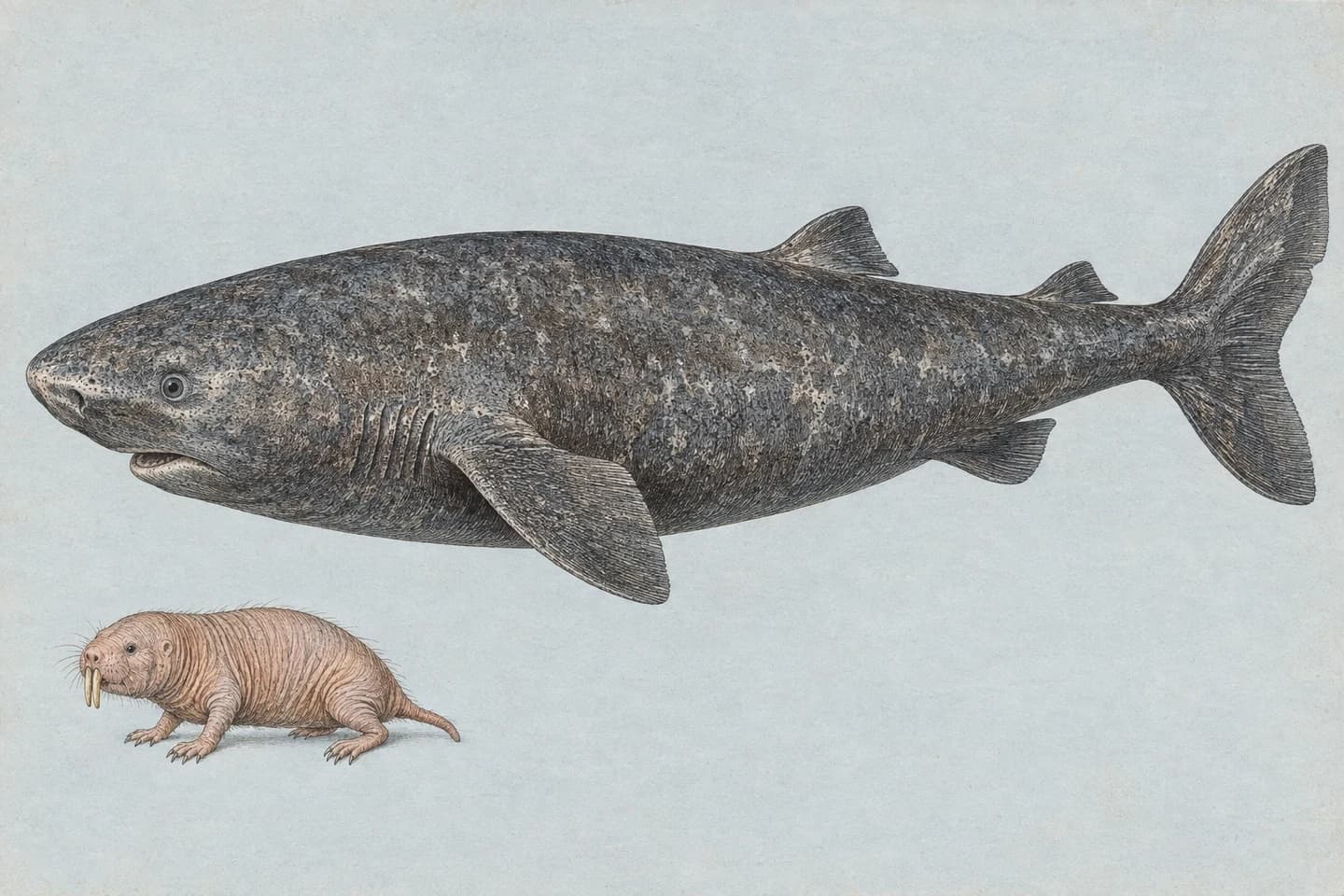
Nielsen and colleagues used eye-lens radiocarbon dating in Greenland sharks. For the largest sampled animal, they estimated an age of 392 years with an uncertainty of ±120 years, reported as a 95.4% probability range. This is an age estimate from a model, with its uncertainty retained.
What remains unresolved
An exceptional animal establishes a documented observation, while typical survival needs population data. Comparisons across species also require attention to age estimation and the conditions in which animals lived.
The next useful experiment
Audit a striking longevity claim from the original measurements to the final estimate, then test whether it holds with another method or independent sample.
Proposed experiments →The wider strategy
The presentation uses survival experiments as the basis for comparing interventions. This approach provides the common evidence record on which those comparisons depend.
The Death-Fighting Spectrum presentation ↗