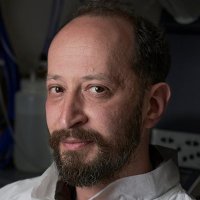
Peter Lidsky
Lidsky put a real thorn in aging theory: lifespan limits may be pathogen control, not just biological wear. Solid scientist, but the longevity impact is still mostly an idea, not a field shift.
Role
scientisthigh confidence
This is the one channel the evidence actually shows: he authored multiple peer-reviewed aging papers advancing the pathogen-control/programmed-aging hypothesis. Delete those papers and his evidenced longevity impact shrinks sharply.
Dimension breakdown
This score rates longevity commitment only. The role tags above — scientist, investor, and the rest — say what this person is; we don't score those separately.
Future vision
3.0/ 10
Lidsky has a coherent public theory about why lifespan limits and aging may have evolved, centered on pathogen control and lifespan setpoints. This shows conceptual engagement with aging biology, but the evidence does not show a concrete, durable vision for ending aging, reversing decline, materially extending healthy lifespan, or a specific translational roadmap.
medium confidence
Scientific impact
6.0/ 10
Peter Lidsky has credible direct scientific impact, with primary citation_metrics showing a solid but not field-defining profile: h-index 20, 2,417 total citations, and several papers above 200 citations. The strongest citation impact appears concentrated in SARS-CoV-2/virology papers rather than explicitly longevity-focused work. His aging-related publications propose a pathogen-control hypothesis of aging and appear in reputable venues, including PNAS and Trends in Ecology & Evolution, but the provided evidence does not show that these aging ideas have become field-defining or heavily cited. Overall this supports above-average scientific impact, but not top-tier field-shaping impact in longevity.
high confidence
Capital deployed
N/A
The provided evidence contains academic publications and citation metrics but no disclosed investments, donations, grants personally directed by Lidsky, fund allocation role, philanthropy, or institution-building resource deployment toward longevity.
No evidence of public capital deployment activity; available evidence portrays Lidsky as an academic scientist rather than a funder, donor, investor, or institution-builder.
medium confidence
Strategic taste
3.0/ 10
The evidence shows a coherent and somewhat contrarian intellectual thesis: Lidsky repeatedly argued that aging/lifespan limitation may have evolved as a pathogen-control or immune strategy. This suggests some strategic taste in framing an underexplored longevity hypothesis. However, there is no evidence of counterfactually important bets, deployed capital, founded organizations, programs, or field-building projects, so the score remains low-to-moderate.
low confidence
Field creation
1.0/ 10
The field_creation dimension applies, but the provided evidence shows no founded organizations, active organizations, donation-created programs, protocols, communities, categories, or funding paths attributable to Peter Lidsky. The available sources only show academic authorship/co-authorship, which may indicate scientific participation but does not demonstrate field-building activity that made longevity work more legible or possible for others.
high confidence
Bravery and conviction
4.0/ 10
Peter Lidsky shows moderate bravery/conviction through a public, contrarian scientific stance on aging: he argued that shorter lifespan may be adaptive as a pathogen-control strategy, a view presented against standard non-adaptive explanations of aging. The evidence also shows sustained conviction across multiple later papers. However, the record provided does not show major career sacrifice, financial downside, intense public criticism, self-experimentation, or field-defining risk-taking, so the score should remain moderate rather than high.
medium confidence
Multiplier effect
3.0/ 10
Multiplier effect applies, but the evidence shows mainly academic citation influence rather than broader second-order leverage such as attracting capital, founding organizations, policy attention, public legitimacy, or follow-on projects. Primary citation metrics indicate some scholarly reach, including 2,417 citations and h-index 20, but there is no evidence of organizations, investments, donations, endorsed theories, public strategy, collaborators beyond coauthorship, or field-building activity.
medium confidence
Vision
Destination
Dear All! If you are curious about aging, what it is, why can't we still cure it, and what could be done to change this disgraceful situation, or just curious about the work my lab and I are doing, come to my book signing session on June 12th at the Frontier Tower, San Francisco!
Peter Lidsky - Why do we age and how to stop it?
This is why I believe our journey toward curing aging has not even truly begun and will not begin until we find out what aging is, or, in other words, build a scientific paradigm.
If the pathogen control hypothesis is correct, rejuvenating the immune system should be the first and most immediate priority in our quest to defeat aging and death.
Path
No canonical quotes yet.
Strategy
No strategy evidence was available for Peter Lidsky, so his longevity strategy cannot be characterized. There are no supported investments, donations, founded organizations, or projects to analyze. Stage preference, area focus, geography focus, risk appetite, and time horizon are unknown. No evidence-backed collaborators or lineage links were identified.
UnknownUnknown
Portfolio
Investments
No public rows yet.
Donations
No public rows yet.
Organizations founded
No public rows yet.
Scientific output
h-index20
Citations-
Papers11
Trials0
Bravery and conviction
Criticisms